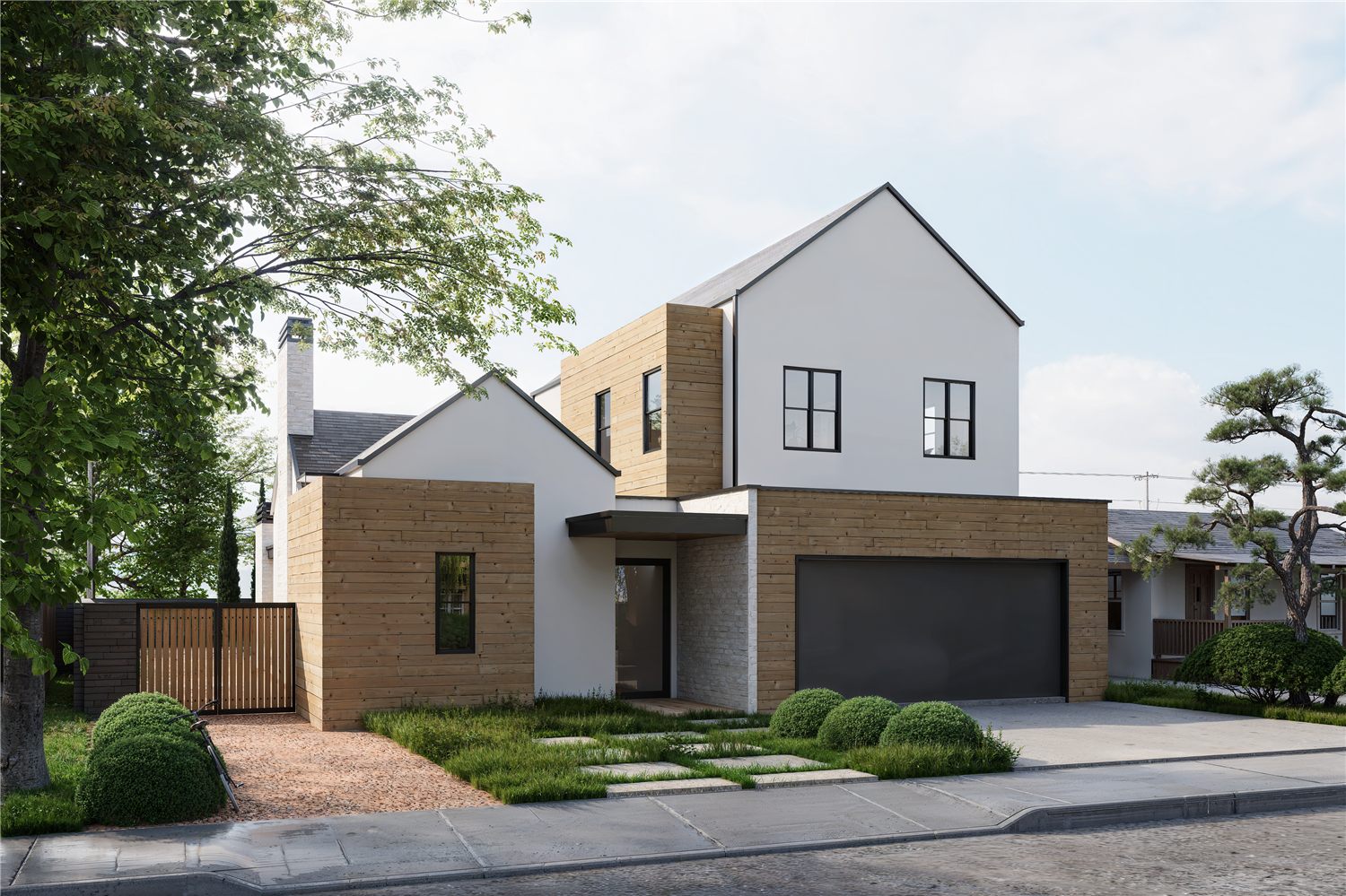
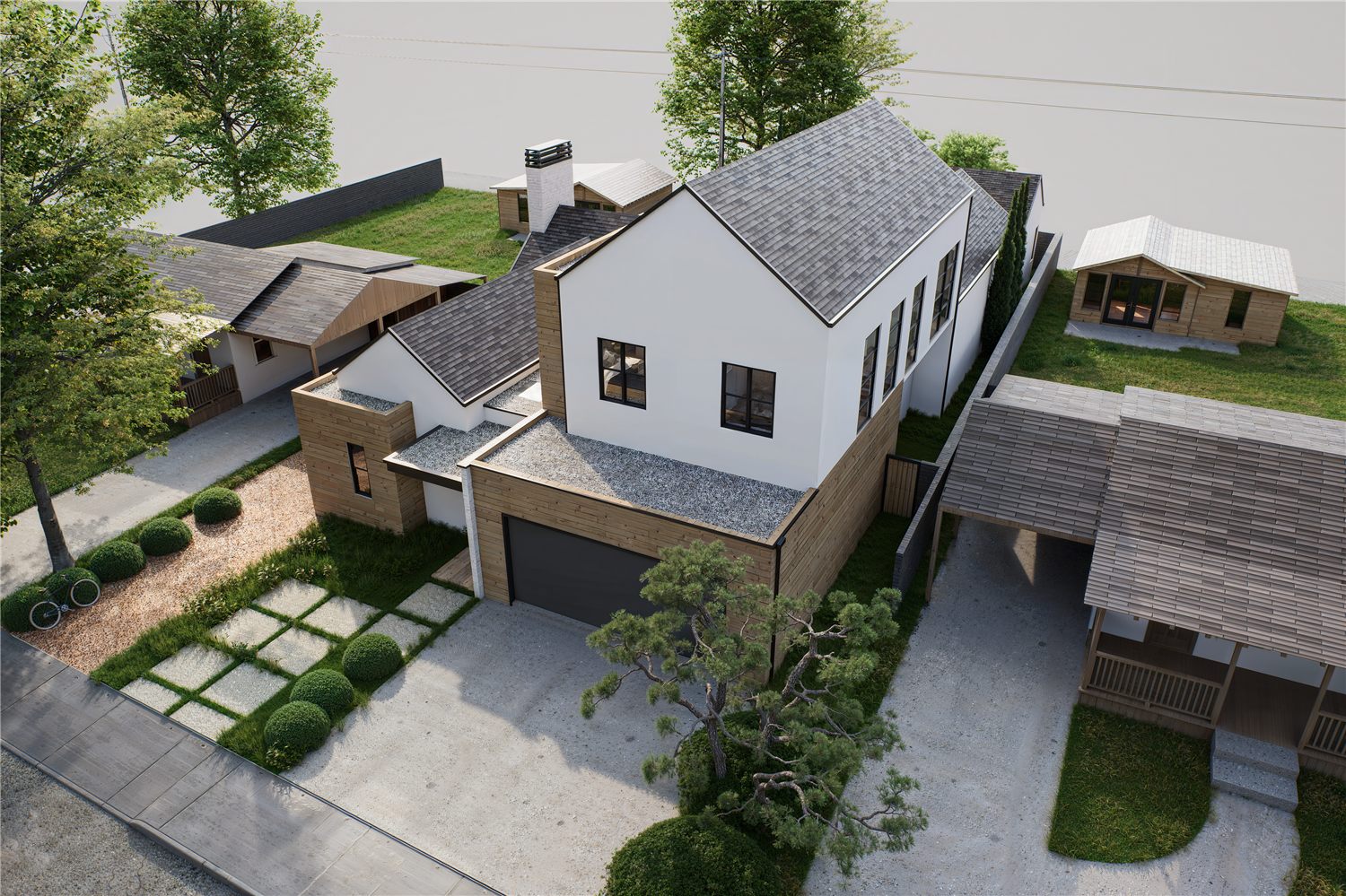
If your property is in unincorporated Maricopa County rather than inside a city, the utility picture for a casita looks different from anywhere else in the Valley. Most county lots are on septic instead of sewer, many are on a private well or a private water company instead of a city meter, and the address for the unit comes from the County, not a city. Here is how each connection is handled on a county lot, what gets reviewed before a permit can issue, and what it costs.
The short version
On a county lot, your ADU drains to your existing septic system if the County confirms it has the capacity, draws water from your well or your existing water service, and gets its own APS or SRP electric meter. The septic review is the step that decides everything else, so we run it first.
County lots tend to be bigger, which cuts both ways: more room to place the unit, but longer runs if you put it far from the house. Distance from your home's lines to the ADU is still the biggest driver of utility cost.
Septic: the County decides first
County regulations say no one may add to an onsite wastewater system without written approval, and the County's homeowner guide is explicit that adding bedrooms or plumbing fixtures can raise the system's design flow and require review (Maricopa County Onsite Wastewater Guide for Homeowners). Design flow is figured at 150 gallons per day per bedroom or 25 gallons per fixture unit, whichever is greater, so a one-bedroom casita adds a real load.
The process starts with a Minor Plan Review, which the County's own instructions say covers "adding a guest house, pool house or other permanent structure." Environmental Services checks capacity and setbacks and comes back with one of three answers:
- Adequate. The ADU ties into your existing system. This is the outcome we design for, and it's common on newer systems sized for a larger home.
- Alteration. The tank or the disposal field needs to be enlarged or replaced. That's a separate County permit with inspections, and it changes the budget.
- New system. A second system, or a full replacement, with a Notice of Intent to Discharge. County rules generally don't allow one system to serve two dwellings unless separate systems aren't possible, so the County makes that call on your lot.
Review takes up to 30 business days, and the County's approval is what releases the building permit, which is why we file it before the plans are finished. If your lot is a county island with a city sewer stub at the property line, state rules may require you to connect instead of using septic; we check that first.
Water: well or private company
On a domestic well: your ADU tees off the home's water line after the pressure tank, with its own shutoff valve. Arizona's exempt-well statute caps the pump at 35 gallons per minute for household use and sets no limit on the number of residences on the property, so a well that serves your home can serve the casita too (A.R.S. § 45-454). We look at the well's yield and the pressure tank size, because a second household running laundry and a shower at the same time can outpace a marginal well.
On a private water company such as EPCOR or Arizona Water Company: the ADU tees off after your existing meter. The companies size meters by fixture count and treat a second dwelling on one lot case by case, so we confirm with your provider whether the existing meter stays or a larger one is required.
- Optional private submeter. Renting the unit? A submeter on the ADU's water line lets you track its use and bill a tenant. Arizona's tenant-billing rules are in our separate meter vs. submeter guide.
Electric: its own meter, County-assigned address
Your ADU gets its own electric meter from APS or SRP, whichever serves your area. That means a separate power bill and no added load on your home's panel.
- SOKO applies to APS or SRP, and the utility sets the connection point. On larger county lots the run from the transformer can be long, and the utility's route decides the trench length.
- SOKO digs the trench and installs conduit to the utility's design; the utility pulls the wire and sets the meter.
- A separate meter needs its own address. In unincorporated Maricopa County the Planning & Development Address Official assigns it, normally with the building permit (Maricopa County Addressing Regulations).
- Plan on added utility lead time. Scheduling is set by APS or SRP, not SOKO.
Option: power from your home's panel
We can instead feed the ADU from your home's electrical panel, with one shared bill, when a load calculation shows your panel has room, usually a 200-amp service. It's often a fit for family or guest use, and if you have rooftop solar it's usually the better economics. If your panel is too small, a new ADU meter is usually better value than upgrading your home's service.
Easements
State law says an ADU may not be built on a current or planned public utility easement without written consent from every utility that uses or could use it. The County doesn't keep easement records for lots outside recorded subdivisions, so we pull them from your title report before we place the unit.
What it costs in Maricopa County
Utility connections are priced per linear foot of trench plus fixed connection items. Your proposal shows the measured run lengths for your site.
Standard connections
| Item | Price | Includes |
|---|---|---|
| Sewer line, ADU to septic tank or home's line | $65 / LF | Trench, 4" pipe, bedding, backfill, compaction |
| Septic or sewer tie-in + cleanout | $1,200 each | Connection to your tank inlet or home's line, required cleanout |
| Water line, in shared sewer trench | $20 / LF | Pipe and fittings in the same trench as sewer |
| Water line, separate trench | $35 / LF | Trench, pipe, fittings, backfill |
| Water tie-in + ADU shutoff valve | $750 | Tee after your pressure tank or meter, dedicated ADU shutoff |
| Electric trench + conduit | $40 / LF | Trench and conduit per APS/SRP design |
| New meter service + ADU panel | $6,000 | Meter base, main disconnect, ADU panel, grounding |
| ADU address (required for new meter) | $350 | SOKO request and coordination with the County |
| County, MCESD and utility fees | At cost | Septic review and inspections, address fee, APS/SRP, passed through with no markup |
Add-ons and site conditions
| Item | Price | When it applies |
|---|---|---|
| Septic alteration or second system | Quoted after County review | Only if MCESD finds your existing system undersized for the ADU |
| Water submeter on ADU line | $750 | Optional, for rental billing |
| Power from home's panel instead of new meter | $3,500 + $40 / LF | Optional, if load calc allows; replaces the $6,000 meter service and $350 address |
| Sewer camera inspection | $350 | Older homes or unknown pipe condition |
| Sewer pump (ejector) | $4,500 allowance | Only if the ADU sits too low for gravity flow to the tank |
| Water meter upsize | Company fee at cost + $1,500 | Private water company lots only, if the fixture count exceeds your meter |
| Caliche, rock, or hardscape removal | Cost + 25% | Found during excavation |
Example: a 40-foot run with shared sewer and water trench, a separate 40-foot electric trench, and a new meter comes to about $13,300 before County and utility fees. The County's septic minor review and inspection add roughly $600 in fees at cost; an alteration or new system is a separate number.
What moves the number
- The septic answer. Adequate capacity keeps the utility budget close to a city lot. An alteration or second system is the single biggest swing on a county project.
- Distance. Every foot between your home's lines and the ADU is priced. Big lots invite long runs; we place the unit to keep them short.
- Well yield and pressure. A marginal well may need a larger pressure tank or storage to carry two households.
- Soil. Caliche and rock are common across the county and slow excavation.
- Utility route. APS or SRP sets the meter location and service route, which can lengthen the electric trench on a large parcel.
What this pricing assumes
- Pricing applies to unincorporated Maricopa County projects. Inside city limits, see our posts for Phoenix, Scottsdale, Mesa, Tempe, Chandler, and Gilbert.
- Run lengths are measured at the site visit and confirmed on the permit site plan.
- County, MCESD, and utility fees are billed at cost, as invoiced.
- Excludes septic alteration or replacement, well drilling or pump work, gas service, relocation of existing utilities, landscape and hardscape restoration beyond the trench, and repairs to existing home systems.
- Requirements reflect Maricopa County's zoning ordinance as modernized effective January 2026, County Environmental Services regulations, and utility policies as of September 2026 and may change.
We run this for you
On a county lot the septic review is the critical path, so we file it early, confirm the well or water service, and pull the address and the APS or SRP application while the plans are being drawn. Building a casita outside city limits? Check your property or call 480-660-3133.
Sources: Maricopa County Environmental Health Code Chapter II Section 8; Maricopa County Onsite Wastewater Guide for Homeowners and Minor Plan Review instructions; Maricopa County Addressing Regulations; Maricopa County Zoning Ordinance (2026); A.R.S. § 45-454 and § 11-810.01; SRP Electric Service Specifications; APS Electric Service Requirements Manual. County regulations, utility requirements, and fees change; verify current requirements with Maricopa County and your utility before making design decisions. Pricing shown is SOKO's standard connection pricing as of September 2026 and is confirmed in your written proposal.